If your skin feels rough, dull, or uneven, a body scrub may be the simple solution your routine is missing. Body scrubs are designed to exfoliate away dead skin cells and reveal smoother, brighter skin underneath. But not all scrubs work the same way. From salt and sugar to coffee and clay, body scrubs come in a range of textures and offer unique skincare benefits. Understanding how each one works can help you choose the best scrub for healthier-looking skin.
Body scrub benefits
Body scrubs offer numerous skin benefits, and with consistent use, they can improve your skin’s health and yield the following results:
- Smoother skin texture
Exfoliation removes the buildup of dead skin cells that can make the skin feel rough or look dull.
- Improve circulation
Body scrubs can improve circulation by stimulating blood flow when massaged into the skin, promoting a healthier, more radiant appearance.
- Brighten skin
Regular exfoliation can help brighten the skin’s appearance, as the newer skin cells revealed underneath tend to look fresher and more even in tone.
- Improve the effectiveness of other skincare products.
When the layer of dead skin cells is removed, moisturizers, lotions, and body oils are able to penetrate more easily, allowing the skin to absorb hydration more effectively.
- Unclog pores and prevent ingrown hairs
This is particularly helpful before shaving or hair removal.
For some people, body scrubs may also help improve the appearance of rough patches, keratosis pilaris, and mild body acne by clearing away debris, oil, or excess keratin and promoting healthier skin cell turnover. When used appropriately and followed by proper moisturization, body scrubs can be a simple yet effective way to maintain soft, glowing, and healthy-looking skin.
Types of body scrubs
The most common types of body scrubs are salt, sugar, and coffee scrubs.
Salt:
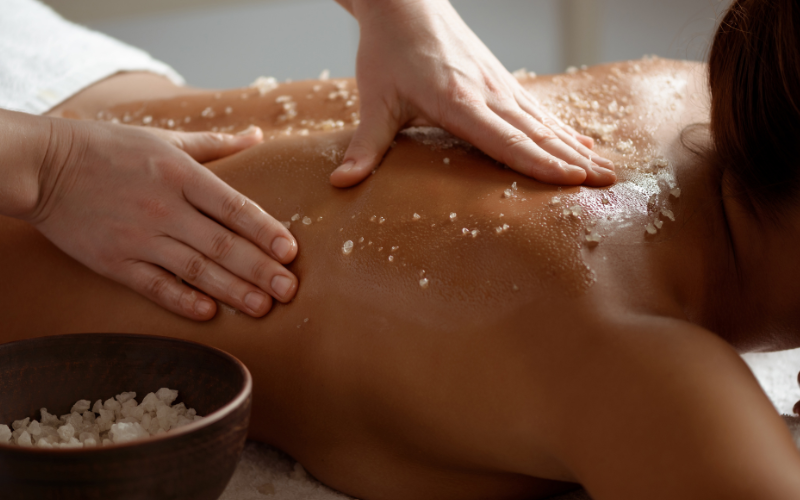
Salt scrubs are one of the most traditional and powerful forms of physical exfoliation. Sea salt or mineral salts contain naturally occurring minerals such as magnesium and potassium that can help detoxify and soften the skin. Because salt crystals tend to be larger and more abrasive than other exfoliants, they are effective for rough areas like elbows, knees, and feet. They can also help stimulate circulation. However, their coarse texture can be too harsh for sensitive skin or freshly shaved skin, and salt can sting if applied to small cuts or irritated areas.
Sugar:
Sugar scrubs are generally considered a gentler alternative to salt scrubs. Sugar granules are smaller and rounder, which makes them less abrasive and more suitable for sensitive or delicate skin. Sugar is also a natural humectant, meaning it helps draw moisture into the skin, leaving it feeling softer and hydrated after exfoliation. Because sugar dissolves quickly in water, the exfoliating effect may not last as long during a shower, making it slightly less effective for very rough or thick skin.
Coffee:
Coffee scrubs are popular for their stimulating and antioxidant properties. The natural caffeine in coffee can temporarily improve circulation and may help reduce the appearance of puffiness or cellulite by tightening the skin slightly. Coffee grounds also provide moderate physical exfoliation, while antioxidants help protect the skin from environmental damage. One drawback is that coffee grounds can be messy and may clog shower drains if not rinsed away properly. Additionally, the grounds can sometimes be too rough for very sensitive skin.
Now onto some underrated types of body scrubs that are less known but are chock-full of benefits.
Botanical scrubs typically use finely ground plant materials such as crushed fruit seeds, nut shells, rice powder, or oatmeal to exfoliate the skin. These scrubs often combine exfoliation with plant-based nutrients, antioxidants, and soothing compounds. For example, oatmeal can calm irritated skin while ground fruit enzymes may help support gentle exfoliation. Botanical scrubs can be a good option for people looking for more natural skincare products. However, some botanical particles. For example, crushed nut shells can have jagged edges that may cause micro-tears in the skin if the formula is too rough.
Clay-based scrubs combine mild physical exfoliation with the detoxifying properties of natural clays such as kaolin or bentonite. Clay helps absorb excess oil, draw out impurities, and cleanse pores, while exfoliating particles remove dead skin cells. This type of scrub can be particularly beneficial for oily or acne-prone skin on areas like the back or chest. The downside is that clay can sometimes feel drying if used too frequently, especially for people with already dry or sensitive skin. Following with a moisturizer is often necessary to maintain skin balance.
Each type of body scrub offers different benefits, and the best option often depends on your skin type, sensitivity level, and exfoliation needs.
Body scrubs by skin type
Dry Skin
People with dry skin should choose gentle exfoliants that also hydrate and repair the skin barrier. Sugar scrubs are often the best option because sugar crystals are smaller and dissolve in water, making them less abrasive while helping the skin retain moisture. Sugar is also a natural humectant that helps draw water into the skin.
Dry skin types should look for scrubs containing hydrating ingredients such as:
- Shea butter
- Coconut oil
- Jojoba oil
- Honey
- Glycerin
These ingredients replenish moisture while exfoliating. Finely ground oatmeal is another beneficial ingredient because it helps support the skin’s moisture barrier and soothe dryness.
Salt scrubs are usually not ideal for very dry skin because their coarse texture can worsen dryness or irritation.
Sensitive Skin
Sensitive skin requires very mild exfoliation with smooth or finely milled particles. Sugar scrubs, botanical scrubs with soft powders, or enzyme scrubs are generally the safest options. Experts recommend avoiding large, sharp particles that can scratch the skin and instead using fine grains such as rice powder, oatmeal, or jojoba beads.
Sensitive skin should look for calming ingredients such as:
- Aloe vera
- Chamomile
- Calendula
- Oat extract
- Colloidal oatmeal
These ingredients reduce redness and irritation while exfoliating gently.
Sensitive skin types should also avoid scrubs with strong fragrance, dyes, or alcohol, as these can trigger irritation.
Acne-Prone Skin
Oily or acne-prone skin often benefits from scrubs that help absorb excess oil and unclog pores. Clay-based scrubs are especially helpful because clays like kaolin or bentonite draw out impurities and oil from the skin while lightly exfoliating.
Beneficial ingredients for oily skin include:
- Kaolin clay
- Bentonite clay
- Tea tree oil
- Charcoal
- Salicylic acid or willow bark extract
These ingredients help cleanse pores and control oil production. Clay scrubs can be particularly useful on areas like the back and chest, where body acne is common.
Rough or Thick Skin
People with thicker or rough skin, such as on the elbows, knees, or feet, would benefit more from a stronger exfoliator. Salt scrubs are typically best for this skin type because their larger mineral crystals provide deeper exfoliation and help buff away thick layers of dead skin.
Look for ingredients such as:
- Sea salt or Himalayan salt
- Mineral salts
- Essential oils
- Shea butter or almond oil
Mineral salts can also provide trace minerals that soften the skin while exfoliating.
However, salt scrubs should not be used on freshly shaved or irritated skin because they can sting.
Dull or Uneven Skin
If the main concern is dullness, uneven texture, or cellulite, coffee scrubs or botanical scrubs can be helpful. Coffee grounds provide moderate exfoliation, and caffeine may temporarily improve circulation and skin tightness. Botanical scrubs using fruit enzymes or plant powders can also brighten the skin.
Ingredients to look for include:
- Coffee grounds or caffeine
- Papaya or pumpkin enzymes
- Green tea extract
- Vitamin-rich plant extracts
These ingredients help promote smoother, brighter-looking skin while supporting circulation.
Who should avoid body scrubs
While body scrubs are safe for most people when used correctly, there are situations where they should be avoided or used cautiously. Individuals with active skin irritation, open cuts, sunburn, inflamed acne, eczema flare-ups, or rosacea should generally avoid physical exfoliation until the skin has healed.
Scrubs can worsen inflammation or damage an already weakened skin barrier. People with very sensitive skin may still use body scrubs, but should opt for gentler formulas with finer particles and exfoliate less frequently.
How often to use
Body scrubs are designed to exfoliate the skin by removing dead skin cells from the surface, improving skin texture and overall appearance. However, how often they should be used depends largely on skin type and the strength of the scrub. For most people, using a body scrub two to three times per week is sufficient to maintain smooth and healthy skin.
Those with sensitive or easily irritated skin may benefit from exfoliating only once per week, while individuals with thicker or oilier skin may tolerate exfoliation up to three times weekly. Over-exfoliating can damage the skin barrier, leading to dryness, redness, and irritation, so allowing the skin time to recover between treatments is important.
In a shower routine, body scrubs should be used after the skin has been cleansed and softened with warm water. Allowing the skin to soak for a few minutes helps loosen dead skin cells, making exfoliation more effective and less abrasive. Most people use scrubs after their body wash, though some scrubs also function as cleansers. If shaving is part of your routine, exfoliating beforehand can help remove dead skin that might block hair follicles and may reduce the likelihood of ingrown hairs.
Over exfoliation
While body scrubs can leave skin feeling smooth and refreshed, using them too frequently can lead to over-exfoliation, a condition where the skin’s protective barrier becomes damaged from excessive removal of surface cells. The outermost layer of the skin acts as a barrier that helps retain moisture and protect against bacteria, irritants, and environmental stress. When this layer is exfoliated too aggressively or too often, the skin may struggle to maintain hydration and protect itself properly.
Physical scrubs can cause tiny abrasions if used too often or applied with too much pressure. Over time, this repeated irritation weakens the skin barrier and disrupts the skin’s natural balance.
Side Effects
- persistent redness or sensitivity,
- dry, tight, or flaky skin, despite regular moisturizing.
- burning or stinging sensations when applying products
- shiny or overly smooth skin, can be a sign that too much of the protective outer layer has been removed.
- Breakouts
Solutions
If over-exfoliation occurs, the most important step is to stop exfoliating temporarily to allow the skin time to repair itself. During this recovery period, it is best to focus on gentle, hydrating skincare products that help restore the skin barrier. Look for moisturizers containing ingredients such as ceramides, hyaluronic acid, glycerin, and panthenol can help replenish lost moisture and support barrier repair. Avoiding harsh cleansers, strong active ingredients, or additional exfoliants can also help reduce irritation while the skin heals.
Once the skin has recovered, body scrubs can be reintroduced more gradually using gentle pressure.
Physical vs chemical exfoliation
Body scrubs are a form of physical exfoliation, meaning they work by physically scrubbing away dead skin cells from the skin’s surface. This differs from chemical exfoliation, which uses ingredients such as alpha hydroxy acids (AHAs), beta hydroxy acids (BHAs), or enzymes to dissolve the bonds between dead skin cells, allowing them to shed naturally. To compare the benefits of the two and learn how to incorporate both types of exfoliators into a skin routine, physical vs chemical exfoliation for smooth glowing skin is the deep dive you need.
Summary
Body scrubs are exfoliating treatments that help remove dead skin cells, leaving the skin smoother, brighter, and more refreshed. The different types of body scrubs, such as salt, sugar, coffee, botanical, and clay, can each offer unique exfoliating properties and skincare benefits. Some provide deeper exfoliation for rough areas, while others are gentler and better suited for sensitive skin. When used correctly, body scrubs can help improve circulation, prevent ingrown hairs, unclog pores, and enhance the absorption of moisturizers and body treatments. Choosing the right body scrub for your skin type and using it in moderation lets you safely enjoy its many benefits.