Acne is not a one-size-fits-all condition. Many people assume all breakouts are the same, but in reality, there are different types of acne, each with its own causes, appearance, and treatment approach. If you’ve been struggling with stubborn breakouts, the issue may not be your products. It could be that you are treating the wrong type of acne.
In this guide, we will break down the most common types of acne: hormonal, fungal, and bacterial. You’ll learn how to identify each one, what causes it, and how to treat it effectively.
Table of Contents
- What type of acne do I have?
- What hormonal acne looks like
- What bacterial acne looks like
- What fungal acne looks like
- Hormonal, bacterial, and fungal acne differences
- Can I have more than one type of acne at the same time?
- Hormonal acne treatment
- Bacterial acne treatment
- Fungal acne treatment
- Ingredients to avoid for each acne type
- Why isn’t my acne improving?
- How long does it take for acne to clear up?
- Hormonal acne prevention
- Bacterial acne prevention
- Fungal acne prevention
- Summary
What type of acne do I have?
Identifying your acne type starts with observing patterns. Pay attention to where your breakouts occur, how they feel, and when they appear.
If your acne is concentrated along your jawline and follows a monthly pattern, it is likely hormonal. If you notice a variety of blemishes across your face that respond to typical acne products, it may be bacterial. If your breakouts are itchy and look very similar to each other, fungal acne is a strong possibility.
If you are still unsure, seeing a dermatologist can help you get a clear diagnosis and avoid wasting time on ineffective treatments.
What hormonal acne looks like
Hormonal acne tends to follow a predictable pattern. It usually appears along the lower part of the face, especially the chin, jawline, and sometimes the neck. The breakouts are often deep under the skin, inflamed, and painful to the touch.
Unlike typical pimples, these blemishes do not always come to a head. They can feel like hard lumps beneath the surface and may last longer than other types of acne. Many people also notice that these breakouts flare up around the same time each month, especially before their period.
Because of its depth and persistence, hormonal acne can feel more stubborn and harder to treat than other forms.
The causes hormonal acne
Hormonal acne is driven by internal fluctuations in hormones, particularly androgens. These hormones increase oil production in the skin. When excess oil mixes with dead skin cells, pores become clogged, leading to breakouts.
Several factors can trigger these hormonal shifts. Changes during the menstrual cycle are one of the most common causes. Stress can also play a role by increasing cortisol, which indirectly affects oil production. Other triggers include conditions like PCOS, pregnancy, and changes in birth control.
Since the root cause is internal, topical treatments alone may not fully resolve hormonal acne.
What bacterial acne looks like
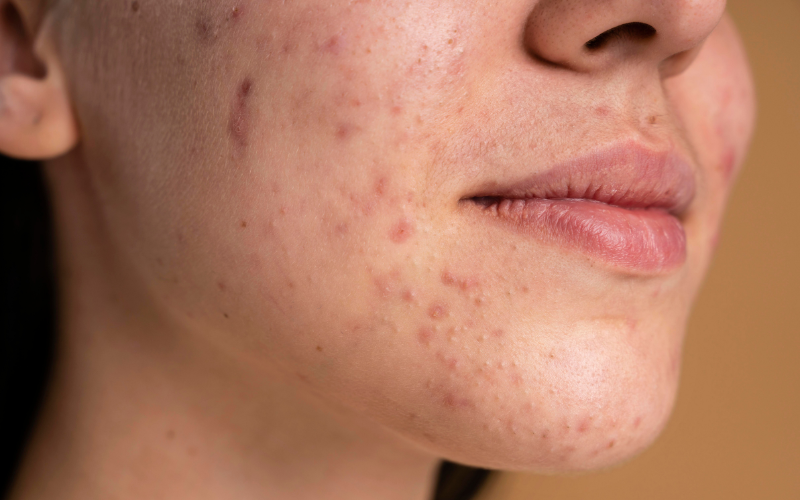
Bacterial acne is the most recognizable form of acne. It often appears as a mix of whiteheads, blackheads, and red inflamed pimples. Some blemishes may have a visible white or yellow center, while others appear as small, irritated bumps on the skin’s surface.
This type of acne can show up almost anywhere on the face, especially on the forehead, cheeks, and nose. It may come and go more quickly than hormonal acne and often responds well to consistent skincare.
The overall appearance tends to be more varied, with different sizes and types of blemishes appearing at the same time.
The causes bacterial acne
Bacterial acne develops when pores become clogged with oil and dead skin cells, creating an environment where bacteria can grow. Once bacteria multiply inside the pore, inflammation occurs, leading to redness and swelling.
External factors can contribute as well. Using pore-clogging products, not cleansing properly, or frequently touching your face can increase the likelihood of breakouts. Even everyday items like pillowcases and makeup brushes can introduce bacteria to the skin.
Because this type of acne is caused by surface-level factors, it often responds well to targeted topical treatments.
What fungal acne looks like
Fungal acne has a more uniform appearance compared to other types. It usually presents as clusters of small, similar-looking bumps that can appear on the forehead, chest, back, or shoulders.
One of the most noticeable differences is that fungal acne often feels itchy. This is not common with other types of acne. The bumps are typically small and consistent in size, rather than a mix of different types of blemishes.
This uniformity and itchiness are key signs that you may be dealing with fungal acne rather than bacterial or hormonal acne.
The causes of fungal acne
Fungal acne is actually caused by an overgrowth of yeast, not bacteria. The yeast, known as Malassezia, naturally lives on the skin, but certain conditions can cause it to multiply excessively.
Warm, humid environments can create the perfect setting for this overgrowth. Sweating, tight clothing, and lack of airflow can also contribute. In some cases, overuse of antibiotics can disrupt the skin’s balance, allowing yeast to thrive.
Because fungal acne is not caused by clogged pores in the traditional sense, it does not respond to typical acne treatments.
Hormonal, bacterial, and fungal acne differences
The main differences between these types of acne lie in their causes, appearances, and locations.
Hormonal acne is driven by internal changes and tends to appear as deep, painful breakouts along the jawline. Bacterial acne is caused by clogged pores and bacteria, often appearing as a mix of surface-level blemishes across the face. Fungal acne is caused by yeast overgrowth and shows up as small, itchy, uniform bumps.
Understanding these differences is essential because each type requires a different treatment approach.
Can I have more than one type of acne at the same time?
Yes, it is very common to have more than one type of acne at the same time. For example, you might experience hormonal acne along your jawline while also dealing with bacterial acne on your forehead.
Some people also develop fungal acne on their chest or back while having other types on their face. This combination can make treatment more complicated, since different areas may require different products.
Understanding that acne is not always uniform can help you build a more targeted and effective routine.
Hormonal acne treatment
Treating hormonal acne often requires a combination of topical care and internal support. Ingredients like retinoids and salicylic acid can help keep pores clear and reduce skin inflammation.
However, because hormones are the root cause, treatments that address internal imbalances may also be necessary. This can include hormonal birth control or medications prescribed by a doctor.
Lifestyle factors also matter. Managing stress, maintaining a balanced diet, and getting enough sleep can all support healthier skin over time.
Bacterial acne treatment
Bacterial acne is usually the most responsive to topical treatments. Ingredients such as benzoyl peroxide help reduce acne-causing bacteria, while salicylic acid unclogs pores and prevents buildup.
A consistent skincare routine is key. Cleansing regularly, avoiding pore-clogging products, and keeping your skin clean can make a significant difference.
With the right approach, many people begin to see improvement within a few weeks.
Fungal acne treatment
Fungal acne requires anti-fungal treatments rather than traditional acne products. Ingredients like ketoconazole or zinc-based formulas are often effective at reducing yeast overgrowth.
In addition to treatment, small lifestyle changes can help prevent flare-ups. Showering after sweating, wearing breathable fabrics, and avoiding heavy, oily products can all make a difference.
It is important to avoid using the wrong treatments, as they may worsen the condition rather than improve it.
Ingredients to avoid for each acne type
Certain ingredients can worsen acne depending on the type you have. Heavy oils and pore-clogging ingredients can aggravate bacterial acne. For fungal acne, many oils and fatty acids can actually feed the yeast and make breakouts worse.
Fragrances and alcohol-based products can irritate the skin, especially if you are already dealing with inflammation. For hormonal acne, overly harsh treatments can disrupt the skin barrier, leading to further irritation without addressing the root cause.
Choosing gentle, non-comedogenic products is often the safest approach across all acne types.
Why isn’t my acne improving?
One of the most frustrating parts of dealing with acne is not seeing results right away. In many cases, the issue is not consistency but using the wrong treatment for your acne type.
If you are treating fungal acne with traditional acne products or hormonal acne with only surface-level solutions, progress may be slow or nonexistent. It is also important to give treatments enough time to work.
How long does it take for acne to clear up?
Most acne treatments take at least four to eight weeks to show noticeable improvement. In some cases, it can take several months to see significant changes. Skin also goes through adjustment periods, which may include temporary breakouts.
Consistency, patience, and using the right approach for your specific type of acne are key to achieving clearer skin.
Hormonal acne prevention
Preventing hormonal acne focuses on supporting internal balance while keeping pores clear. Since this type of acne is driven by hormonal fluctuations, consistent lifestyle habits can make a noticeable difference over time.
Start by managing stress levels, as elevated cortisol can trigger increased oil production. Getting enough sleep and maintaining a balanced diet with stable blood sugar levels can also help regulate hormones. Some people find that reducing high-glycemic foods or dairy improves their skin, though this varies.
Topically, using gentle products that keep pores clear, like retinoids or salicylic acid, can help prevent buildup before it turns into deep breakouts. If hormonal acne is persistent or severe, medical treatments such as birth control or prescription medications may be necessary to control it at the source.
Bacterial acne prevention
Preventing bacterial acne is largely about keeping pores clear and minimizing bacterial buildup on the skin.
A consistent skincare routine is key. Cleansing your face daily helps remove excess oil, dirt, and debris that can clog pores. Using non-comedogenic products can also prevent buildup that leads to breakouts.
Hygiene habits matter more than people realize. Regularly washing pillowcases, cleaning makeup brushes, and avoiding touching your face can reduce the spread of bacteria. It is also important not to over-cleanse or use overly harsh products, as this can irritate the skin and trigger more oil production.
Incorporating ingredients like benzoyl peroxide or salicylic acid can help keep bacteria under control and prevent future breakouts.
Fungal acne prevention
Preventing fungal acne involves controlling the environment that allows yeast to grow.
Since this type of acne thrives in warm, moist conditions, keeping the skin clean and dry is essential. Showering after sweating, especially after workouts, can help prevent buildup that encourages yeast overgrowth. Wearing loose, breathable fabrics also reduces the buildup of trapped heat and moisture.
Choosing the right skincare products is equally important. Avoid heavy oils and occlusive ingredients that can feed the yeast. Lightweight, non-comedogenic, and oil-free products are typically a better option.
In some cases, using antifungal products occasionally, especially during hot or humid weather, can help keep fungal acne from returning.
Summary
Understanding the different types of acne is the first step toward clearer skin. Hormonal acne, fungal acne, and bacterial acne each have unique causes and require different treatments. Once you identify what you are dealing with, it becomes much easier to choose products and routines that actually work.
If your acne has been stubborn or confusing, take a step back and focus on identifying the type first. That one shift can make all the difference in your results.