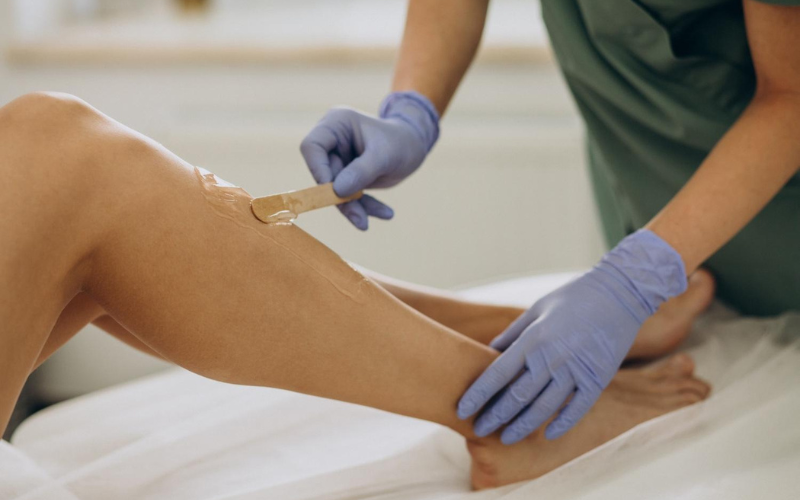
When it comes to long-lasting hair removal, waxing and sugaring are two of the most popular options, and for good reason. Both methods remove hair from the root, leaving skin smoother for longer than shaving ever could. But while they may seem similar on the surface, they differ in technique, ingredients, comfort level, and overall experience.
If you’ve ever wondered which one is better for your skin, pain tolerance, or lifestyle, you’re not alone. Below, we break down the most commonly asked questions about waxing vs. sugaring so you can confidently choose the method that works best for you.
Table of Contents
- What’s the difference between waxing and sugaring?
- Which method hurts less?
- Which method is better for sensitive skin?
- Which is better for Brazilian or bikini areas?
- Which method is best for coarse hair?
- At-home waxing vs salon waxing
- Which method is easier for beginners?
- Waxing and Sugaring Aftercare
- Potential risks
- What products should I avoid after treatment?
- How long do results last with waxing vs sugaring?
- Summary
What’s the difference between waxing and sugaring?
At their core, both waxing and sugaring remove hair from the root, but in different ways.
Waxing involves applying warm (sometimes hot) wax to the skin in the direction of hair growth. A strip is then placed on top (or the wax hardens on its own), and the hair is removed quickly in the opposite direction of growth. This method grips both the hair and the top layer of skin, which is why it can sometimes feel more aggressive.
Sugaring, on the other hand, uses a paste made from simple, natural ingredients like sugar, lemon, and water. The paste is applied against the direction of hair growth and removed in the direction of growth. This technique primarily adheres to hair and dead skin cells rather than live skin, making it a gentler alternative.
Another key difference lies in temperature. Sugaring paste is usually applied at body temperature, while wax can be quite hot, increasing the risk of burns if not handled properly.
Which method hurts less?
Pain is subjective, but most people say that sugaring is less painful than waxing.
Because waxing removes hair against the direction of growth, it adheres not only to the hair but also to the top layer of the skin, which can pull at live skin. This can feel more intense for first-timers or those with sensitive skin. This can also contribute to irritation, redness, and discomfort.
On the other hand, sugaring removes hair in its natural direction of growth and doesn’t adhere as strongly to the skin. It instead primarily binds to hair and dead skin cells. This often results in less tugging and discomfort. Additionally, because the paste is applied at a lower temperature, there’s no added heat sensation. These are the main reasons why sugaring is often described as a gentler alternative.
That said, pain tolerance varies from person to person, and areas like the bikini line or underarms will feel more sensitive regardless of the method you choose.
Which method is better for sensitive skin?
If you have sensitive or reactive skin, sugaring is generally the better option.
The formula is simple and free from synthetic additives, making it less likely to cause irritation or allergic reactions. Since it doesn’t stick as aggressively to the skin, it reduces the risk of redness, inflammation, and post-treatment sensitivity.
Waxing can still be safe for sensitive skin, but it depends heavily on the type of wax used and the technician’s skill. Some waxes contain fragrances or resins that may trigger irritation, especially for those prone to breakouts or redness.
If your skin tends to react easily, sugaring offers a more forgiving and skin-friendly experience.
Which is better for Brazilian or bikini areas?
For delicate areas like the Brazilian or bikini line, you might prefer sugaring, especially if you have sensitive skin or low pain tolerance.
That’s because sugaring is gentler and less likely to stick to live skin, making the experience more tolerable in such a sensitive area. It also tends to lead to fewer ingrown hairs, which are common in the bikini area.
However, waxing is still widely used for Brazilian services and can be very effective, particularly for removing coarse hair quickly. Many experienced estheticians can perform waxing in these areas with minimal discomfort and excellent results.
Ultimately, the best choice comes down to your comfort level, skin sensitivity, and your technician’s expertise.
Which method is best for coarse hair?
Both waxing and sugaring are effective for removing coarse hair.
Waxing is often considered slightly more efficient for very coarse or thick hair because of its strong grip. It can remove large sections of dense hair quickly, making it a popular choice for areas like the legs or Brazilian region.
Sugaring can also handle coarse hair, but it may require more passes over the same area to fully remove stubborn strands. That said, many people find that with consistent sugaring, hair grows back finer over time, making future sessions easier.
If your hair is extremely coarse, you might find waxing more effective initially, but sugaring can still be a viable long-term option.
At-home waxing vs salon waxing
At-home waxing can be effective but rarely matches the results of a professional treatment.
Salon professionals are trained to apply wax evenly, remove it efficiently, and minimize discomfort. They also have access to higher-quality products and can tailor the method to your skin type and hair texture.
At home, it’s easier to make mistakes like applying wax at the wrong temperature, pulling in the wrong direction, or missing patches of hair. These errors can lead to uneven results, increased pain, or even skin damage.
If you’re new to hair removal or working with sensitive areas, a professional service is usually the better choice. However, with practice and the right tools, at-home waxing can still be a convenient option for maintenance.
Which method is easier for beginners?
For beginners, waxing is typically easier to learn than sugaring.
Waxing kits are widely available and often come with clear instructions. The process: apply, press, and pull, is relatively straightforward, even if it takes some practice to perfect.
Sugaring, however, requires more technique. The paste must be manipulated correctly, and the flicking motion used to remove hair can be tricky to master. Temperature, consistency, and hand positioning all play a role in achieving good results.
While sugaring may be gentler, it often has a steeper learning curve, especially for DIY use.
Waxing and Sugaring Aftercare
Aftercare is essential to keep your skin smooth, calm, and free of irritation.
Immediately after your treatment:
- Avoid touching the area to prevent bacterial transfer.
- Wear loose, breathable clothing.
- Apply a soothing product like aloe vera or a fragrance-free lotion.
For the next 24–48 hours:
- Avoid hot showers, saunas, and intense workouts.
- Stay out of direct sun exposure.
- Skip exfoliation and active skincare ingredients.
After a couple of days, gentle exfoliation can help prevent ingrown hairs. Keeping the skin moisturized also supports healthy healing and smoother regrowth.
Potential risks
Both waxing and sugaring are generally safe, but they do carry some risks.
Burns can occur with waxing if the wax is too hot. This is less of a concern with sugaring due to its lower temperature.
Irritation and redness are common immediately after treatment, especially for sensitive skin. This usually subsides within a few hours to a day.
Breakouts can happen if bacteria enter open hair follicles or if the skin is clogged after treatment. This is why proper aftercare and hygiene are so important.
Ingrown hairs are another common issue, particularly in areas with coarse or curly hair. Regular exfoliation can help minimize this risk.
Choosing an experienced technician and following aftercare instructions can significantly reduce these risks.
What products should I avoid after treatment?
Your skin is more vulnerable after hair removal, so it’s important to avoid products that could cause irritation.
For at least 24–48 hours, steer clear of:
- Products with strong fragrances
- Alcohol-based toners or sprays
- Exfoliating acids (like AHAs, BHAs)
- Retinoids or vitamin A derivatives
- Heavy oils that may clog pores
These products can irritate freshly treated skin, leading to redness, stinging, or breakouts. Stick to gentle, hydrating, and soothing formulas until your skin has fully recovered.
How long do results last with waxing vs sugaring?
Both waxing and sugaring offer similar longevity when it comes to results.
Typically, you can expect smooth skin for 3 to 4 weeks, depending on your hair growth cycle. Because both methods remove hair from the root, regrowth takes longer compared to shaving.
With consistent treatments, many people notice that hair grows back finer and sparser over time. This can extend the time between sessions and make maintenance easier.
Factors like hormones, hair type, and the area being treated can all influence how long your results last, but overall, waxing and sugaring perform similarly in this regard.
Summary
Choosing between waxing and sugaring ultimately comes down to your personal preferences, skin type, and pain tolerance. Waxing is widely available, beginner-friendly, and highly effective, especially for coarse hair. Sugaring, meanwhile, offers a gentler, more natural alternative that’s ideal for sensitive skin and delicate areas.
If you’re unsure which method to try, consider starting with a professional consultation. Testing both methods on a small area can also help you determine what feels best for your body.
Whichever you choose, proper technique and aftercare will make all the difference in achieving smooth, healthy skin.